
Greenfields: acquiring and developing land

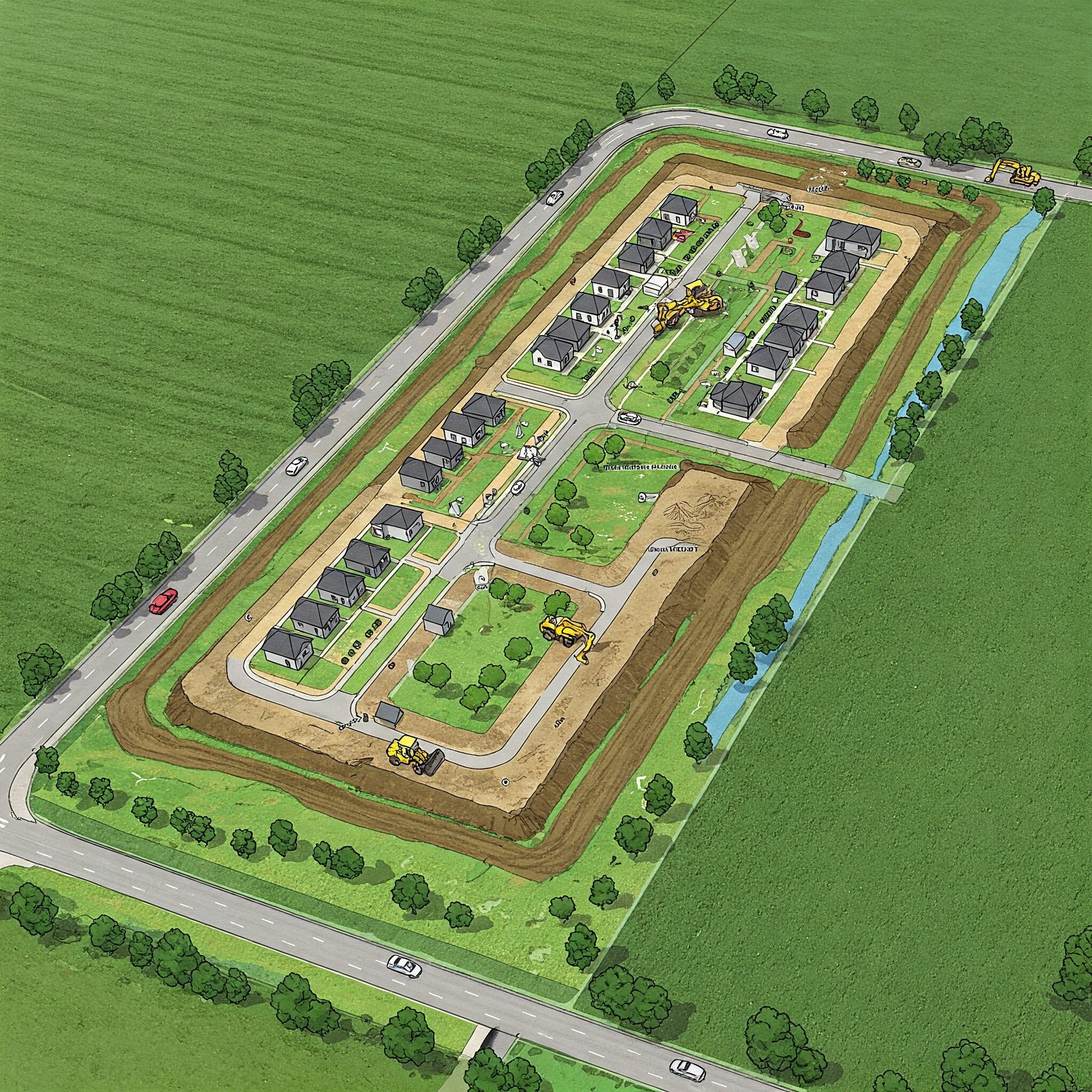
Since 2022 existing housing stock has seen sale volume slow considerably with rising rates locking homeowners in place. This has led to a prolific rise in land development as the best way to bring new housing stock onto the market at scale. Land acquisition is the crucial first step in any residential development project.
We’ve seen financing rise from 60% LTC and 50% LTV on acquisition and development loans all the way up to 85% LTC and 67% LTV. These upper end financing amounts are placed with more experienced sponsors but are also a byproduct of consistent demand from home builders whose primary acquisition target is now finished lots.
If you're getting started in land development here is a starter due diligence checklist.
1. Title and Survey Review:
Title Search: A thorough title search is essential to uncover any potential ownership disputes, liens, easements, or encumbrances that could affect your development plans.
Survey Review: Ensure the survey accurately reflects the property boundaries, easements, and any existing structures. Pay close attention to topography, as it can significantly impact construction costs.
2. Zoning and Regulatory Compliance:
General and Specific Plan: Review the municipality's general (and if in place the specific plans) to see if your business plan aligns with the plans for the city.
Zoning Regulations: Verify the property's zoning designation and permitted uses. Does it align with your intended development plan? Are there any restrictions on density, height, or setbacks?
Building Codes and Permits: Familiarize yourself with local building codes and permitting requirements. Understand the approval process and potential timelines.
Environmental Regulations: Investigate any environmental regulations or potential hazards that could impact the development, such as wetlands, endangered species habitats, or historical sites.
3. Infrastructure and Utilities:
Access and Transportation: Evaluate access to the property and proximity to major roads and transportation networks. Consider traffic patterns and potential congestion.
Utilities Availability: Confirm the availability and capacity of essential utilities like water, sewer, electricity, and gas. Factor in connection costs and potential upgrades.
Drainage and Stormwater Management: Assess the site's drainage patterns and any potential flooding risks. Understand local stormwater management regulations.
4. Environmental Assessment:
Phase I Environmental Site Assessment: This is a crucial step to identify any potential environmental contamination on the property. It involves a review of historical records, site reconnaissance, and interviews.
Further Investigation: If the Phase I assessment reveals potential concerns, further investigation (Phase II) may be necessary, including soil and groundwater testing.
5. Market Analysis:
Supply and Demand: Analyze the local housing market to assess demand for your proposed development. Consider factors like population growth, demographics, and competing projects.
Absorption Rates: Estimate how quickly your units are likely to sell based on current market conditions.
Pricing and Profitability: Conduct a thorough financial analysis to determine the potential profitability of the project, taking into account land acquisition costs, construction expenses, and projected sales prices.
6. Financial Due Diligence:
Property Taxes and Assessments: Understand the property tax rates and any potential special assessments that could impact your project costs.
7. Legal & Capital Advisor Review:
Purchase and Sale Agreement: Have an experienced real estate attorney review the purchase and sale agreement to ensure your interests are protected. You can work with a group like LFB Ventures to get details on lender timeline and due diligence checklists.
Development Agreements: If applicable, negotiate and finalize any necessary development agreements with local authorities.